

European Corporate Services
For decades, Bender Brothers & Co has assisted English-speaking entrepreneurs to establish a substantive corporate presence within the European Economic Area in Liechtenstein. It also has longstanding experience with the negotiation of lump sum residency programmes in Switzerland and Liechtenstein. The Principality has unique strategic advantages over other European jurisdictions, amongst which are the following.
I. EEA and Switzerland
Liechtenstein enjoys EU market access for goods, services, capital, and people through membership of the EEA. Locally regulated firms may promote financial services in 30 European jurisdictions under unified passporting rules. In addition, the Principality affords privileged access to the Swiss market through its shared currency and customs union with Switzerland.
Being only an hour’s drive from Zürich, the Principality is centrally located and enjoys direct access to skilled expertise from neighbouring Switzerland, Austria and Germany. For the purposes of economic substance, office space is affordable.
II. Security
The Principality benefits from a stable political administration under the guidance of a constitutional monarchy and a sovereign AAA rated financial infrastructure. Liechtenstein’s robust banking sector and use of the Swiss Franc provide the highest level of security with respect to counterparty risk. Its innovative approach to legislation ensures a versatile framework for financial and legal services.
III. Responsive Regulatory Environment and Small Government
Regulatory procedures are efficient, pragmatic and responsive on account of the small scale of Liechtenstein’s civic institutions. The country has a somewhat libertarian approach to government, which is continually held to account through referenda. The population has shown itself to be decidedly supportive of the free market over the years.
IV. White-listed Jurisdiction
Liechtenstein applies corporation tax at 12.5%, which is amongst the lowest in the EEA. Unlike other European jurisdictions, such as Ireland, there is no withholding charge on dividends or interest nor any form of capital gains tax. In spite of wide-ranging opportunities for corporate fiscal structuring, the EU and OECD consider the Principality to be an onshore financial centre rather than a tax haven.
V. Asset Protection against Frivolous Litigation
As Liechtenstein never signed the Lugano Convention on the mutual recognition of civil and commercial judgments, it provides a high level of asset protection. A plaintiff cannot rely on relief granted by a foreign court outside of Austria and Switzerland. He would have no choice but to initiate litigation anew in Liechtenstein, a significant disincentive for frivolous actions with little merit.
Considerations for US Investors
The Principality’s straightforward tax code can simplify cross-border corporate arrangements to a far greater extent than DTA agreements, particularly from the perspective of US investors. As a single-owned GmbH company may be classified as a tax transparent Disregarded Entity (DRE) by the IRS, the consolidated fiscal burden can be reliably limited to 12.5% in light of there being no withholding and capital gains tax in Liechtenstein. Even if the GmbH were configured as a Protected Cell Company, the DRE status could be maintained if each cell had a corresponding contractual debt claim for passive LP investors. Furthermore, it is possible for a Liechtenstein fiduciary arrangement to be construed as a revocable foreign grantor trust to ensure tax transparency at the top level of ownership.
Management Team Europe
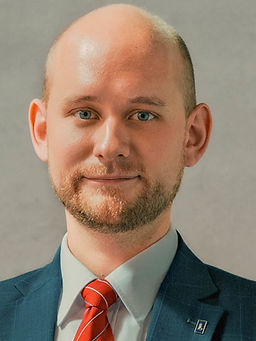
Legal Director
Josef Bergt
In addition to his role as in-house counsel, Dr. Josef Bergt LL.M. is managing partner of Law Firm Bergt & Partners Ltd. He is a Liechtenstein attorney, registered on the EU/EFTA list of lawyers in the Canton of St. Gallen, Switzerland, and a notary of the Principality. Mr Bergt advises private clients, companies and institutions on cross-border private wealth structuring and corporate matters. His international client base extends to the Middle East, US, Britain and the European Economic Area.

Director
Michael Klien
Michael Klien is a senior investment professional with more than 25 years of experience. He began his career at Warburg Dillon Reed in London as a European equity research analyst, before becoming Head of European Insurance Equity Research at Nomura. He later joined UBS Wealth Management as a buy-side equity analyst and was most recently Head Financials Equity Research at Zürcher Kantonalbank. Mr Klien co-founded SafeSide Life AG, a fully digital life insurance platform that grew to more than CHF 100 million of insured coverage within 2 years after launch. Mr Klien holds a BSc in Philosophy and Economics from the London School of Economics. He is fluent in English, German and French.

Director
Georg Liechtenstein
Georg Liechtenstein qualified as a Liechtenstein lawyer in 2007 and worked at LGT Bank between 2008 and 2010. He joined the development team of an encrypted email and data storage service in 2014. In 2018 he completed the Tenity accelerator program in Zurich and co-founded a business in the Swiss insurance sector. Mr Liechtenstein studied law at the University of Vienna and received a Master of Arts in Law and Diplomacy (MALD) from the Fletcher School of Law and Diplomacy. He completed level I and II of the CFA programme.